


DIGIMON UP
3.63.77K Reviews
App Specs
- Version
- 1.3.0
- Updated On
- License
- Free
- Downloads
- 1,000,000+
- Developer
- Bandai Namco Entertainment Inc.
- Categories
- Role Playing
- Platform
- Android
Screenshots



 Analysis by AppCompare
Monster-raising role-playing games usually promise a satisfying loop: discover a creature, help it grow, make meaningful choices, and return later to see how far it has come. DIGIMON UP takes that familiar appeal and places it inside a free mobile game from Bandai Namco Entertainment Inc. I found the idea immediately approachable, especially for anyone who enjoys the Digimon world but wants shorter sessions than a traditional console adventure requires.
The important detail is that this is not simply a character-collection app with a Digimon theme. Its identity rests on raising monsters over time, which makes patience part of the experience. You are not only looking for a strong creature; you are also deciding how much attention, planning, and potentially spending you want to give the process. That makes the game more interesting than its very brief store tagline suggests, but it also means the right expectations matter before you begin.
It is listed for Everyone, so the presentation is designed to be broadly accessible. The game is free to start, while optional purchases range from $0.99 to $64.99 per item. That purchase range deserves attention because random-item purchases can change how a player experiences progression. I would approach it as a casual monster-raising RPG first, and as a spending decision second.
What the raising loop feels like in everyday play
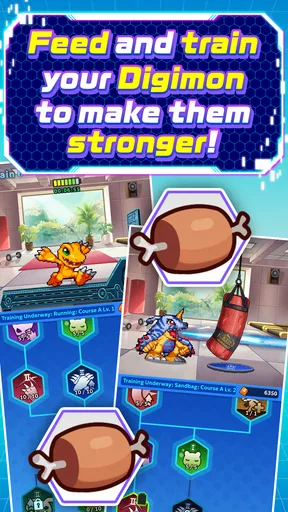
The strongest reason to try DIGIMON UP is the simple emotional pull of watching a Digimon develop. Raising gives ordinary check-ins a purpose. Instead of opening a game only for a single battle, you have a reason to return, inspect your progress, and think about what you want your collection or team to become.
I can easily imagine using it during a commute, while waiting for an appointment, or in the evening when I want something lighter than a long story-driven RPG. A short session can be useful when I have only a few minutes, while a longer visit gives me room to review my monsters and decide what deserves attention next. That flexibility suits mobile play better than a design that expects every visit to be a lengthy commitment.
The main practical insight is to treat your early progress as an observation period. Rather than immediately chasing every available creature or reacting to every reward, I would first learn which parts of raising feel most rewarding to me. Do I enjoy nurturing one favorite, experimenting with several possibilities, or building toward a more efficient group? Answering that question early helps prevent wasted effort and makes later decisions less impulsive.
That approach is especially useful in a game involving random-item purchases. A random reward can be exciting, but excitement is not the same as value. If you open something hoping for one particular result, the outcome may leave you with a creature or item that does not fit your current plan. I would therefore set a personal stopping point before spending anything, rather than deciding after an unlucky result.
Worth Reading Before You Choose

EA SPORTS FC Mobile 26 Is a Bigger Football Game, but It Takes Time

Flipboard Shows What News Apps Must Do Beyond the Feed

Switching to Android Auto Means Rethinking Your Driving Routine

Google Calendar Makes a Crowded Week Easier to Manage

Ludo King Makes the Most of the Minutes Between Plans

Baby Panda World Brings Quick Play to Modern Phones, but Its Game Library Feels Busy
The free entry point also makes the game easy to recommend as a trial. You can see whether the raising rhythm suits you without committing money at the beginning. For me, that is the correct order: play long enough to understand the daily loop, then decide whether optional purchases add enjoyment or merely accelerate a process I already like.
Progress feels better when you choose a narrow goal
A common mistake in collection-focused games is trying to improve everything at once. DIGIMON UP is better approached with a clear short-term target. I would choose one main raising objective, keep a small backup plan, and avoid treating every new reward as an obligation. This reduces clutter in your decision-making and makes each return to the game feel purposeful.
That does not mean ignoring variety. Monster-raising is more enjoyable when you can compare different possibilities, and the Digimon setting naturally encourages curiosity. The useful balance is to explore without constantly abandoning your current plan. If you switch direction every time something new appears, progress can feel scattered even when the game is giving you plenty to do.
Another practical habit is to review your choices before spending resources. Ask whether a new acquisition supports the way you actually play or simply looks appealing in the moment. A creature that fits your preferred routine may be more valuable than a rarer-looking option that demands attention you do not have. This is the kind of trade-off that a short store description cannot explain, but it matters in a raising game.
Where the free-to-play pressure can appear
The presence of random-item purchases creates a tension between nurturing and acquiring. Raising a monster can feel personal and gradual, while random rewards encourage quick decisions. Those two rhythms do not always work together. If the game presents a tempting opportunity just when progress feels slow, a player may start viewing payment as the solution to impatience rather than as an optional extra.
I would be particularly careful during the first few sessions, when everything is new and the desire to see more of the collection is strongest. Early enthusiasm can make a purchase feel harmless, but repeated small decisions can change the overall cost of playing. The safest routine is to enjoy the free portion first, decide what you genuinely value, and only then consider whether a purchase has a clear purpose.
The listed purchase range stretches from a low-cost option to a much larger single-item price. That does not by itself prove that spending is necessary, nor does it tell us how generous the game is without paying. It does mean that families and younger players should use sensible purchase controls, especially because the game carries an Everyone age rating and may appeal to children as well as longtime fans.
For a parent, I would frame the game as a shared conversation rather than an unsupervised spending experience. Agree on whether purchases are allowed, establish a limit outside the game, and explain that random outcomes are not guaranteed shortcuts to a preferred result. The age rating describes broad suitability, but it should not replace practical guidance about optional spending.
Fairness, competition, and what I would watch closely
Fairness is the biggest question for me whenever a free role-playing game combines progression with random purchases. DIGIMON UP clearly includes random-item purchases, but the information available around the game does not establish how those purchases affect competition, whether paid rewards are mainly cosmetic, or whether non-paying players can reach the same goals through ordinary play. I would not pretend to know those answers.
That uncertainty changes how I would recommend it. If you mainly want a personal collection and a relaxed raising routine, the spending issue may remain manageable because you can set your own pace. If you are looking for a competitive environment where skill and planning should matter more than access to paid chances, I would be more cautious until I had personally seen how progression and battles interact.
The distinction between collection satisfaction and competitive advantage is important. A random purchase can feel acceptable when it gives you another interesting direction for your own roster. The same system feels much less comfortable if it determines who can progress faster or field stronger options against other players. Without clear evidence about that balance, I would avoid treating the game as a fair competitive test.
My practical advice is to separate enjoyment from optimization. Play with the monsters you like, learn the raising systems, and resist assuming that the most expensive route is automatically the best route. If you eventually discover that your goals require repeated paid attempts, reconsider whether those goals are worth pursuing. A free game should not quietly turn a hobby into a series of purchases you make just to remain caught up.
Players who dislike chance-based acquisition may find this structure frustrating even if the raising itself is enjoyable. In that case, a premium role-playing game with a fixed price and a more predictable progression model may be a better fit. It will usually offer less of the ongoing mobile collection loop, but it can provide clearer control over what you earn and when you earn it.
How it compares with other monster-raising choices
Compared with a traditional console Digimon RPG, DIGIMON UP is more naturally suited to brief, repeated visits. A console adventure generally gives you a more contained journey, while this mobile format is built around returning to your monsters over time. That makes the mobile option convenient, but it may also feel less satisfying for someone who wants a complete story with a clear ending.
Compared with a typical creature-collection game, the raising focus is the main point of difference. If you care most about watching a monster develop, this should be more appealing than a game where creatures are mostly tools for battles. On the other hand, if your favorite part is exploring a large world, solving story problems, or building a team through a predictable sequence of encounters, another role-playing game may serve you better.
It also differs from a straightforward idle game. The monster-raising theme suggests a more personal relationship with progression, so I would not choose it purely because I want rewards with no decisions. The better audience is someone willing to check in, make choices, and accept that development may take time. If you want constant action and immediate upgrades, the pace may feel too measured.
Questions worth answering before you install
Is it genuinely free to play? Yes, the game is free to download and begin, with optional in-app purchases. The sensible interpretation is not that every element will feel equally fast without payment, but that you can test the core experience before deciding whether to spend.
Should you spend money early? I would say no. First learn the raising loop, identify the monsters or goals you actually care about, and see whether ordinary play already feels rewarding. Random purchases are difficult to evaluate when you do not yet understand what you are trying to improve.
Is it suitable for children? Its Everyone content rating makes it broadly accessible, but the presence of random-item purchases means adults should still manage purchasing access. The game’s friendly presentation should not be confused with a guarantee that every spending decision will be easy for a child to judge.
Does it require a large time commitment? It is designed as a mobile game, so it can fit short check-ins, but the value depends on whether you enjoy gradual progress. Someone who only plays occasionally may still like the convenience, while someone who wants rapid, uninterrupted advancement may find the slower rhythm less appealing.
Will it replace a full Digimon adventure? In my view, no. It offers a different kind of engagement: ongoing raising and collection rather than the feeling of moving through a complete console-style journey. I would recommend it alongside that kind of game, not as a direct substitute for it.
The details I would verify while playing
Because fairness depends on systems that are not captured by a short description, I would pay attention to several things during actual play. First, I would watch whether the game explains the odds or contents of random purchases clearly before a transaction. Second, I would compare the progress of a free account with the progress created by spending, rather than assuming either extreme. Third, I would notice whether the game gives me meaningful reasons to raise different monsters or simply pushes me toward one optimal path.
I would also look at how often the game interrupts the raising experience with purchase prompts. Occasional offers are easy to ignore; a constant stream can make a free game feel less like a hobby and more like a shop. That distinction matters because the best version of this concept should make the monsters and their development the focus, not the transaction screen.
Finally, I would judge the game by how it treats failure. If an unsuccessful attempt teaches me something or opens another useful route, the system feels more generous. If failure mainly encourages another random purchase, the experience becomes harder to recommend. This is not a minor detail: it determines whether experimentation feels safe or expensive.
My verdict on DIGIMON UP
DIGIMON UP is most appealing when you want a Digimon-themed raising routine that fits around everyday life. I like the basic promise of returning to a growing roster, making focused decisions, and enjoying progress in small portions. The free starting point lowers the barrier to trying it, and the Everyone rating makes it accessible to a broad audience.
My recommendation comes with a firm spending boundary. The game includes random-item purchases, and individual items can cost from $0.99 up to $64.99. I would not spend until the free loop has proved that it is enjoyable on its own. Players who are comfortable with chance-based rewards may find optional purchases entertaining, while players who want transparent, fixed progression should consider a premium RPG instead.
The public response suggests a mixed reception: the game has an average rating of 3.2 from around 64 thousand ratings, alongside roughly 3.7 thousand written reviews. It has also passed one million installs, so there is clear interest, but popularity alone should not settle the question of whether its approach suits you. I would treat those figures as a reason to investigate thoughtfully, not as a guarantee.
The current version is 1.3.0, and it runs on operating systems starting with version 9. Those practical details make it easy for many mobile players to test, but compatibility is only the first step. The more important test is whether you enjoy the pace of raising without feeling pushed toward random purchases.
In the end, I would recommend it to Digimon fans who like gradual development, short sessions, and making their own collection goals. I would skip it if I strongly dislike chance-based spending, need a complete story campaign, or want competition where paid access is clearly irrelevant. For everyone else, the best way to approach it is cautiously: start free, choose a narrow raising goal, observe how progress works, and spend only when the game remains enjoyable without pressure.
Pros
- Simple controls make it easy for newcomers to start playing.
- Digimon collecting gives the game a strong sense of progression.
- Short sessions suit quick play on mobile devices.
- The colorful presentation fits the Digimon theme well.
- Frequent team adjustments add variety to battles.
Cons
- Some progression systems may feel repetitive after extended play.
- Higher-level content can require considerable grinding.
- The interface may feel crowded for first-time players.
- Performance can vary on older Android and iOS devices.
- Limited resources may slow progress for free-to-play users.
FAQs for DIGIMON UP
What is DIGIMON UP and how does the game work?
DIGIMON UP is a Digimon-themed mobile game focused on collecting, training, and developing digital monsters through different activities and battles. Players generally progress by completing missions, improving their Digimon, unlocking new content, and managing a team suited to each challenge. The exact features and available modes may vary by version, region, and future updates, so checking the official store description is recommended before downloading.
Is DIGIMON UP free to download and play?
DIGIMON UP can typically be downloaded without an upfront purchase, but free-to-play games may include optional in-app purchases for items, resources, characters, upgrades, or other bonuses. Progress may still be possible without spending money, although some players could encounter waiting periods or limited resources. Before installing, review the store listing for current pricing, in-app purchase details, and any age or payment restrictions.
Does DIGIMON UP require an internet connection?
An internet connection may be necessary for important DIGIMON UP features, including account synchronization, online events, updates, advertisements, purchases, rankings, or server-based gameplay. Some parts of the game might work temporarily offline, but offline access should not be assumed unless the developer clearly confirms it. A stable Wi-Fi or mobile-data connection is recommended, especially during downloads, battles, and progress synchronization.
Is DIGIMON UP suitable for children and younger players?
DIGIMON UP may appeal to younger Digimon fans, but parents should check the official age rating and privacy information before allowing installation. The game may contain in-app purchases, advertising, online communication, or account features that require supervision. It is also advisable to enable parental controls, restrict unauthorized payments, and review the permissions requested by the application so children can play in a safer and more controlled environment.
What devices are compatible with DIGIMON UP?
Compatibility depends on the specific Android or iOS version of DIGIMON UP, as well as the operating system, available storage, memory, and regional availability. Older phones and tablets may experience slower performance, crashes, or installation limitations even when the app appears in the store. Before downloading, compare your device with the minimum requirements shown on Google Play or the App Store, and keep enough free space for updates.


